


We create digital twins of monuments, archaeological sites and facilities: a 3D model true to the real place, designed so that it can be conserved, studied and shown to the public. We start from LiDAR scanning and drone photogrammetry, and from that model we deliver virtual reality experiences and 3D-printed scale models. We stay with you from capture through to launch.
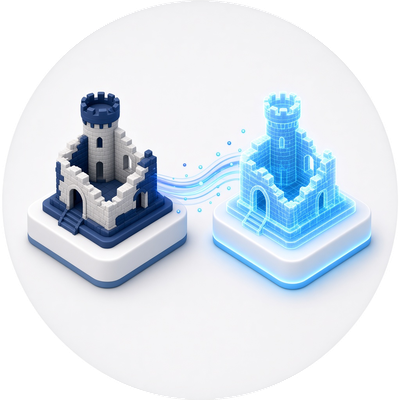
What is a digital twin?
A digital twin is a precise, navigable virtual representation of a building, an archaeological site or a facility. It is used to document what exists today, to reconstruct what can no longer be seen, and to work on that model without intervening on the original.
In heritage we use it to preserve the memory of a monument, to study it and to bring it closer to the visitor. In industry and architecture, the same approach makes it possible to examine a design or a plant, to test changes and to catch errors before they are built.
If the project requires it, the twin can sit alongside our other solutions, such as virtual reality, augmented reality or immersive rooms.
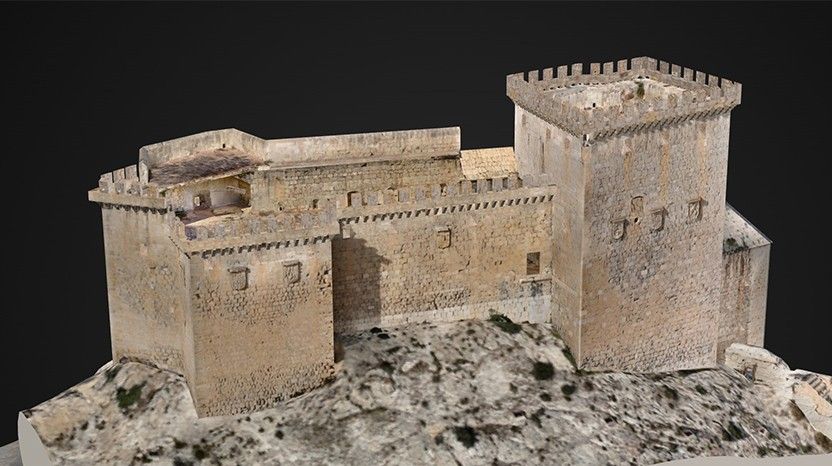
3D model of the Castillo de los Vélez, generated from the scan.
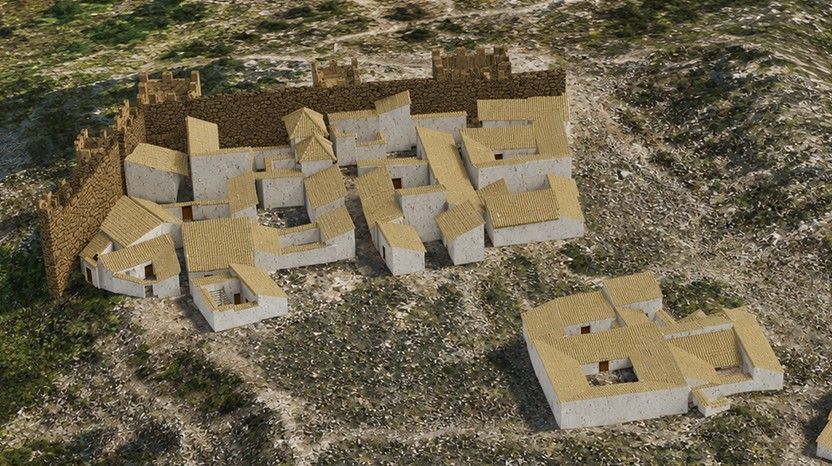
3D reconstruction of Villa Vieja over the documented site.
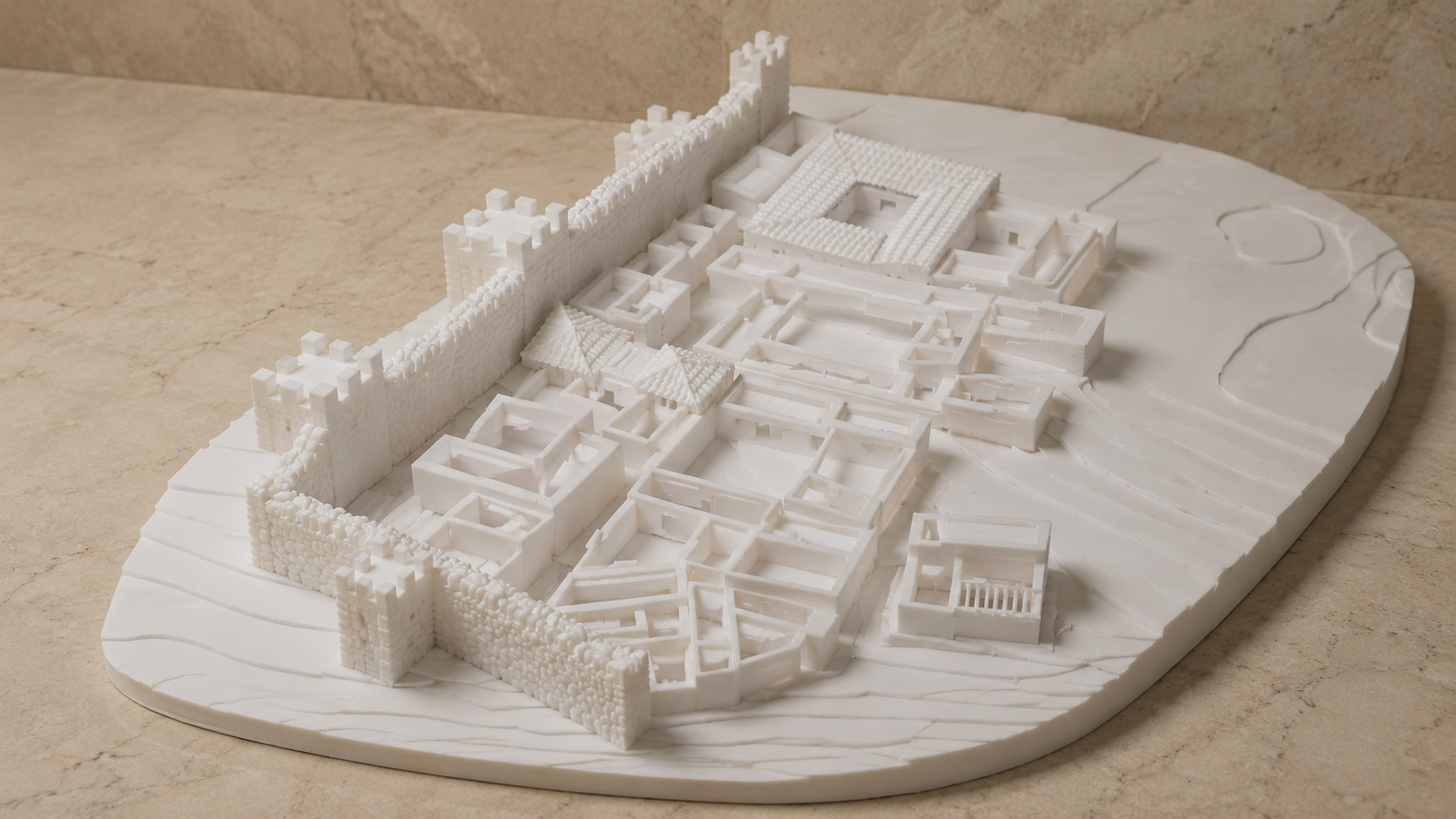
3D-printed scale model of Villa Vieja, in Calasparra.
Benefits of Digital Twins
How we do it
The same process we have used to document archaeological sites, fortresses and cathedrals:
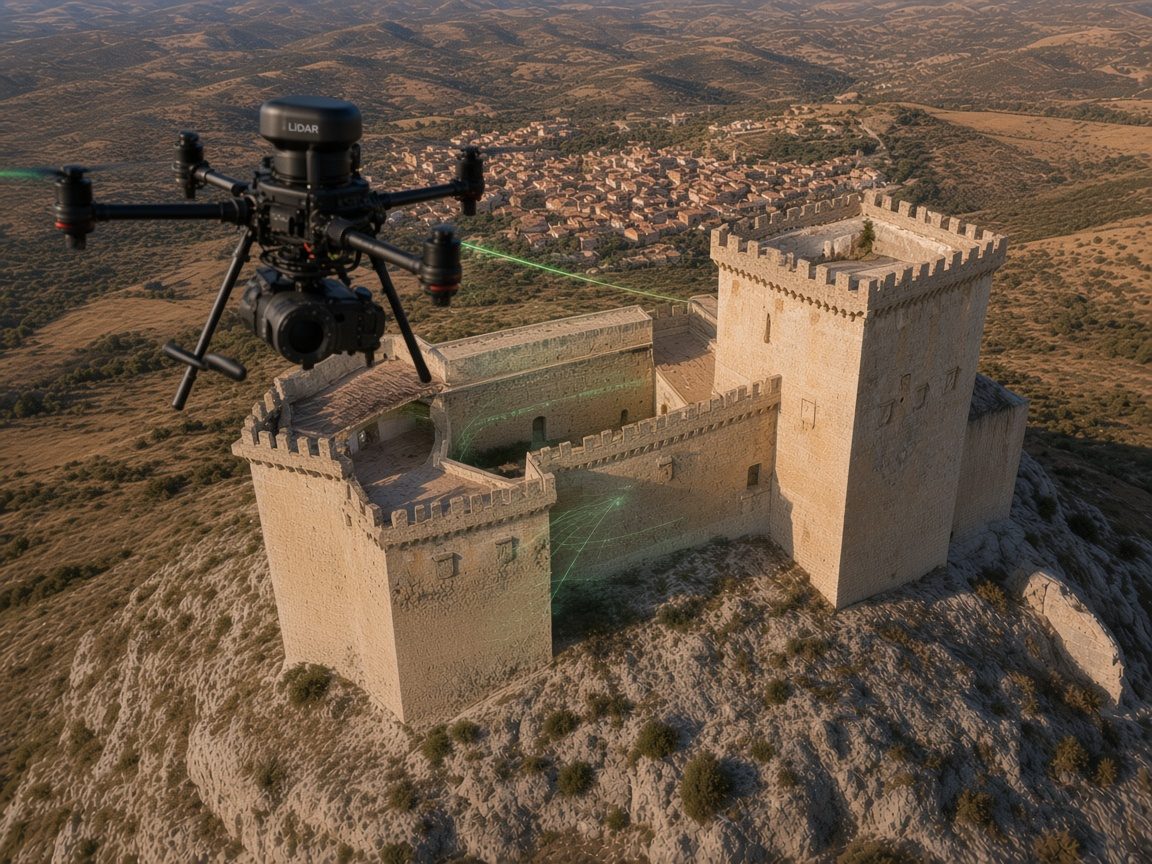
LiDAR drone flight over the Castillo de los Vélez (Mula).
Textured 3D model from the scan of the Castillo de los Vélez.
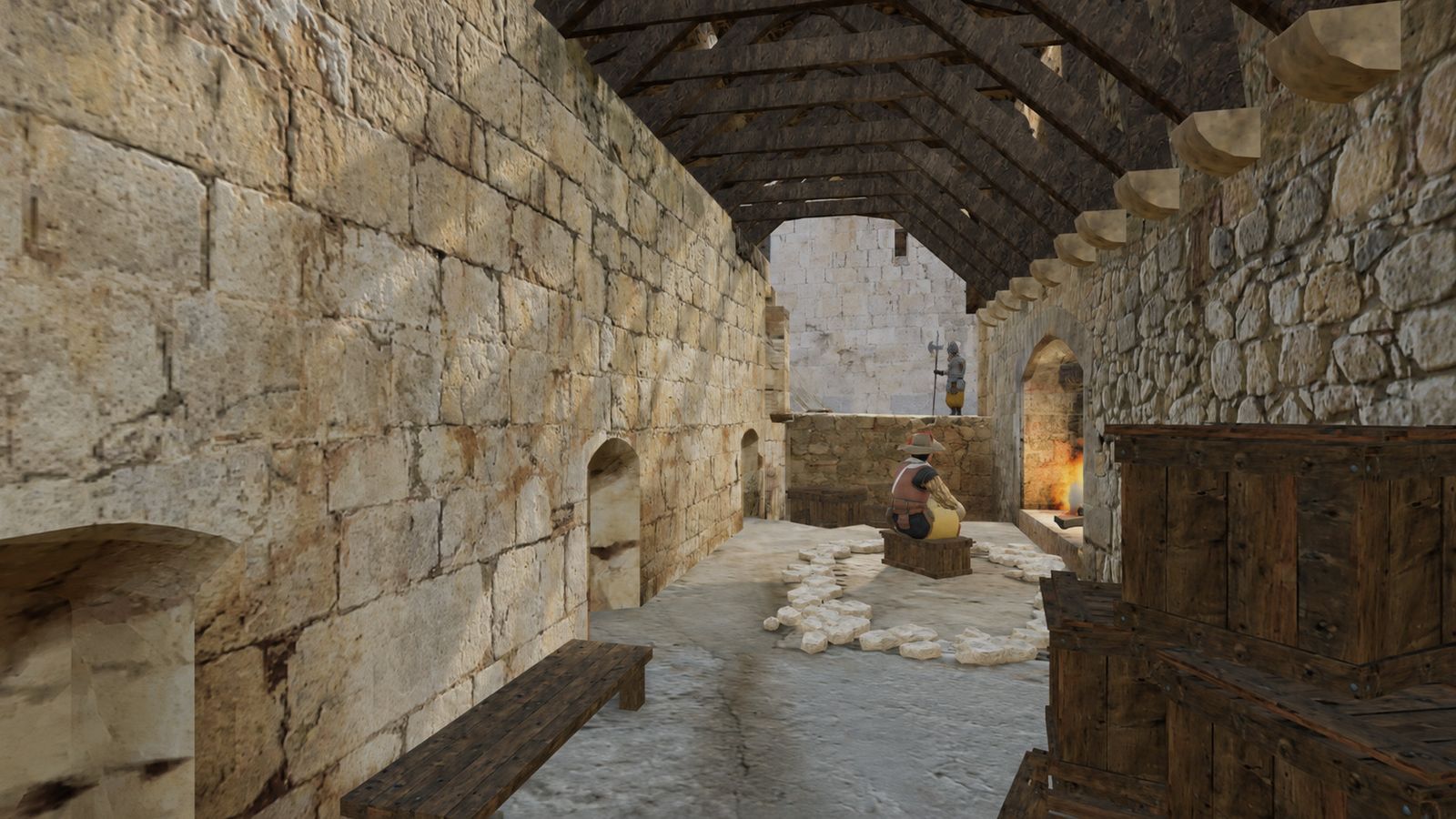
Virtual reality experience of the Castillo de los Vélez.
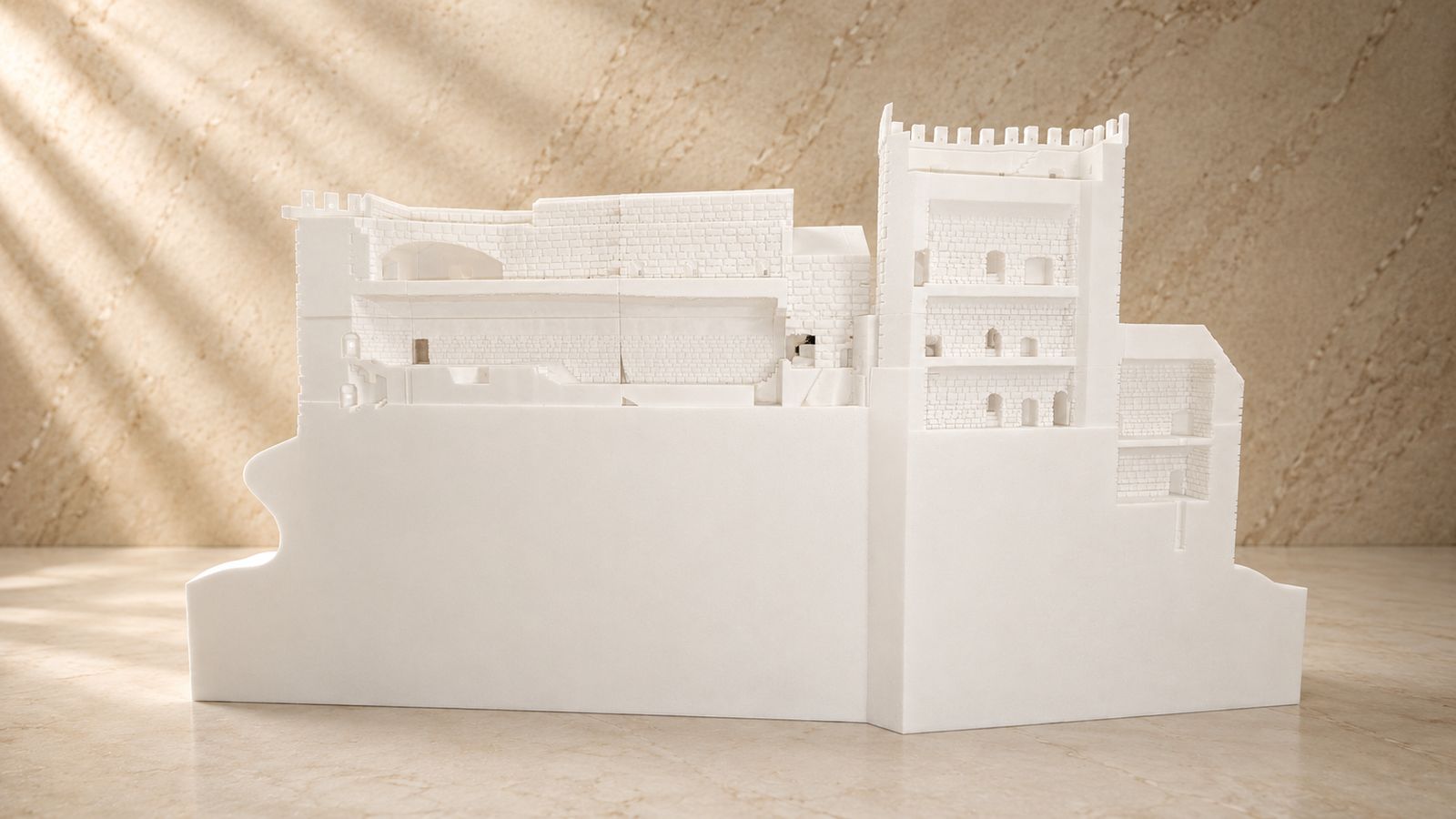
3D-printed scale model of the Castillo de los Vélez, in section.
Applications by sector
Related projects
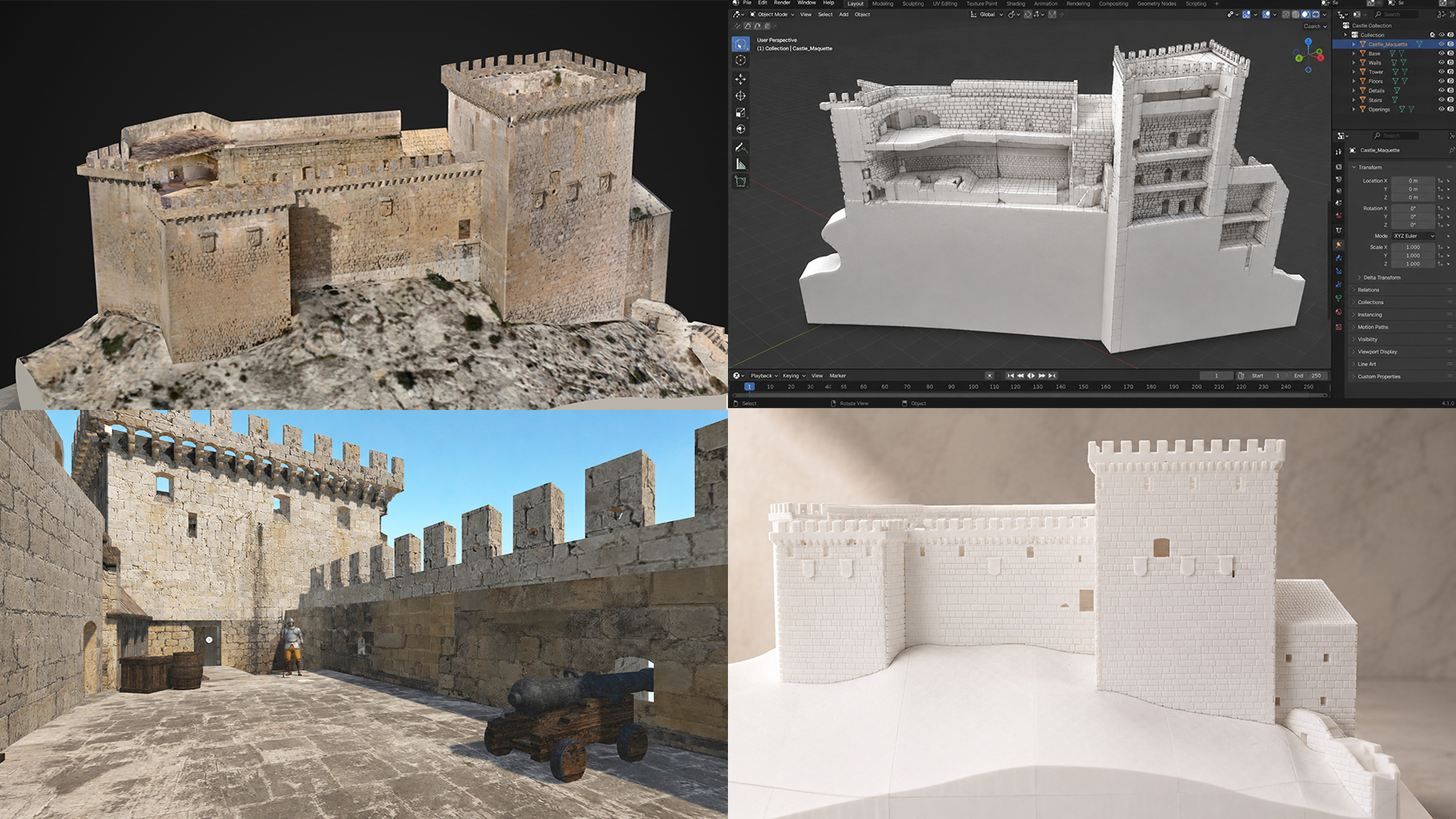
Digital twin and VR experience of the Castillo de los Vélez, Mula
A 3D reconstruction of the Castle of Mula, a fortress of 1520–1531 built over an Andalusi alcazaba. Digital twin, a virtual reality experience for Meta Quest (the “Castillo de Mula” app) and a 3D-printed scale model, adapted for people with visual impairments. The virtual visit is especially valuable because the castle is not regularly open to the public.
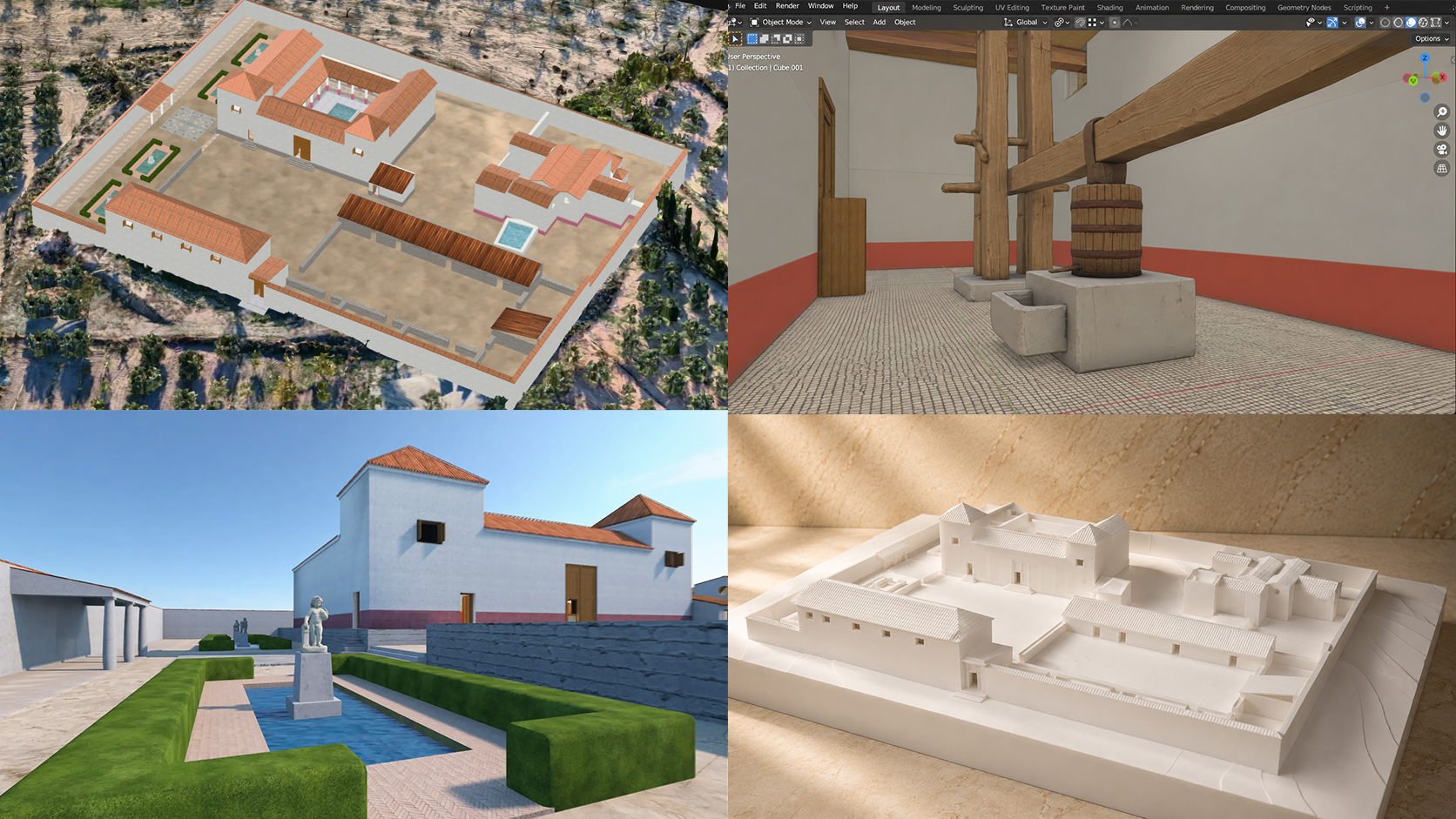
Digital twin and VR experience of the Villa Romana de Los Cantos, Bullas
LiDAR drone scanning and 3D modelling of the Roman villa linked to wine production, with pars urbana and pars fructuaria. It includes a web viewer, a virtual reality experience for Meta Quest and a 3D-printed scale model, on display at the Museo del Vino in Bullas.
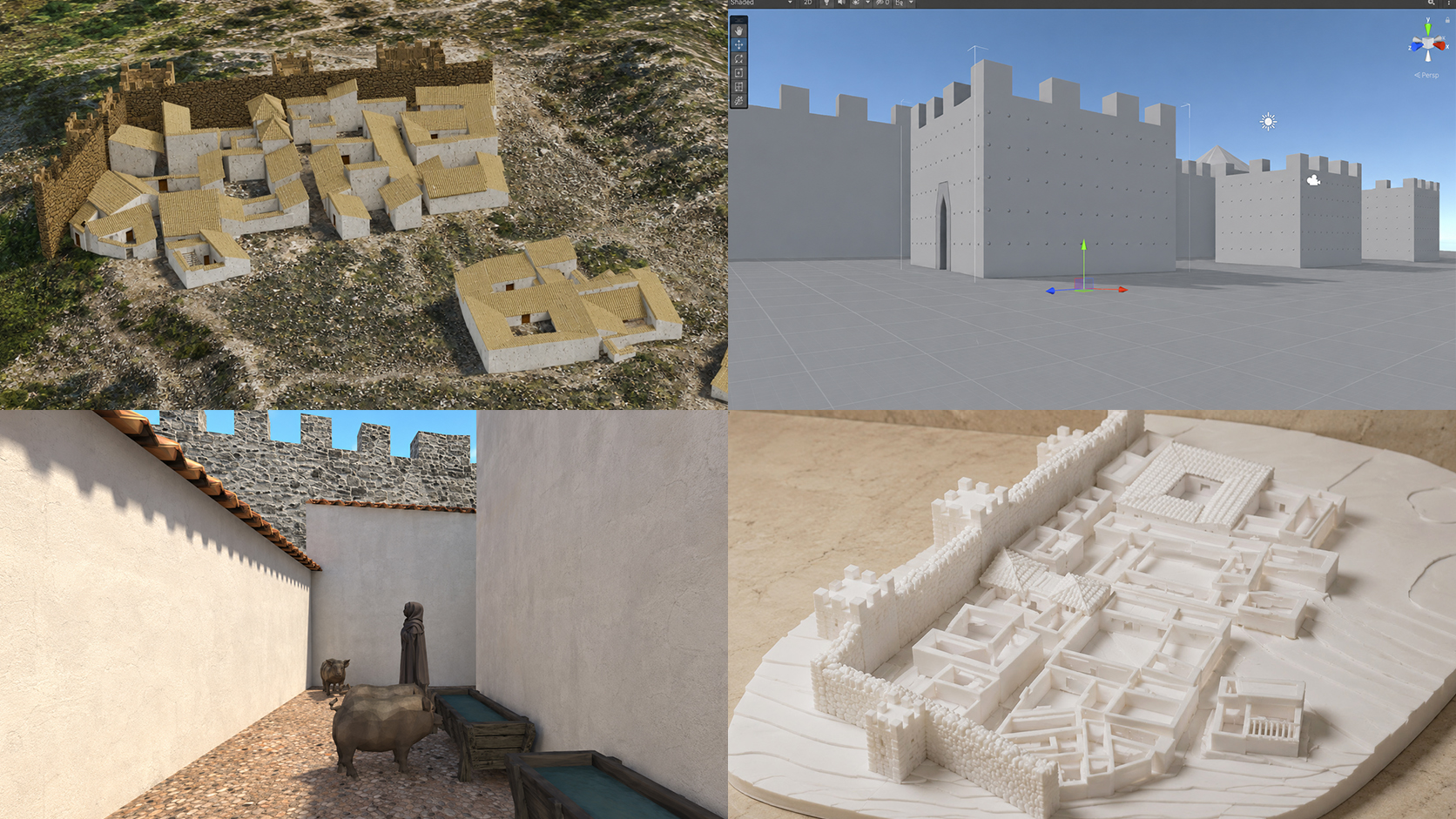
Digital twin and VR experience of the Islamic Alquería of Villa Vieja, Calasparra
A reconstruction of the Hispano-Muslim alquería beside the River Segura, occupied between the eleventh and thirteenth centuries. A digital twin from drone and LiDAR scanning, a virtual reality experience for Meta Quest (the “Villa Vieja” app) and a 3D-printed scale model for exhibition.
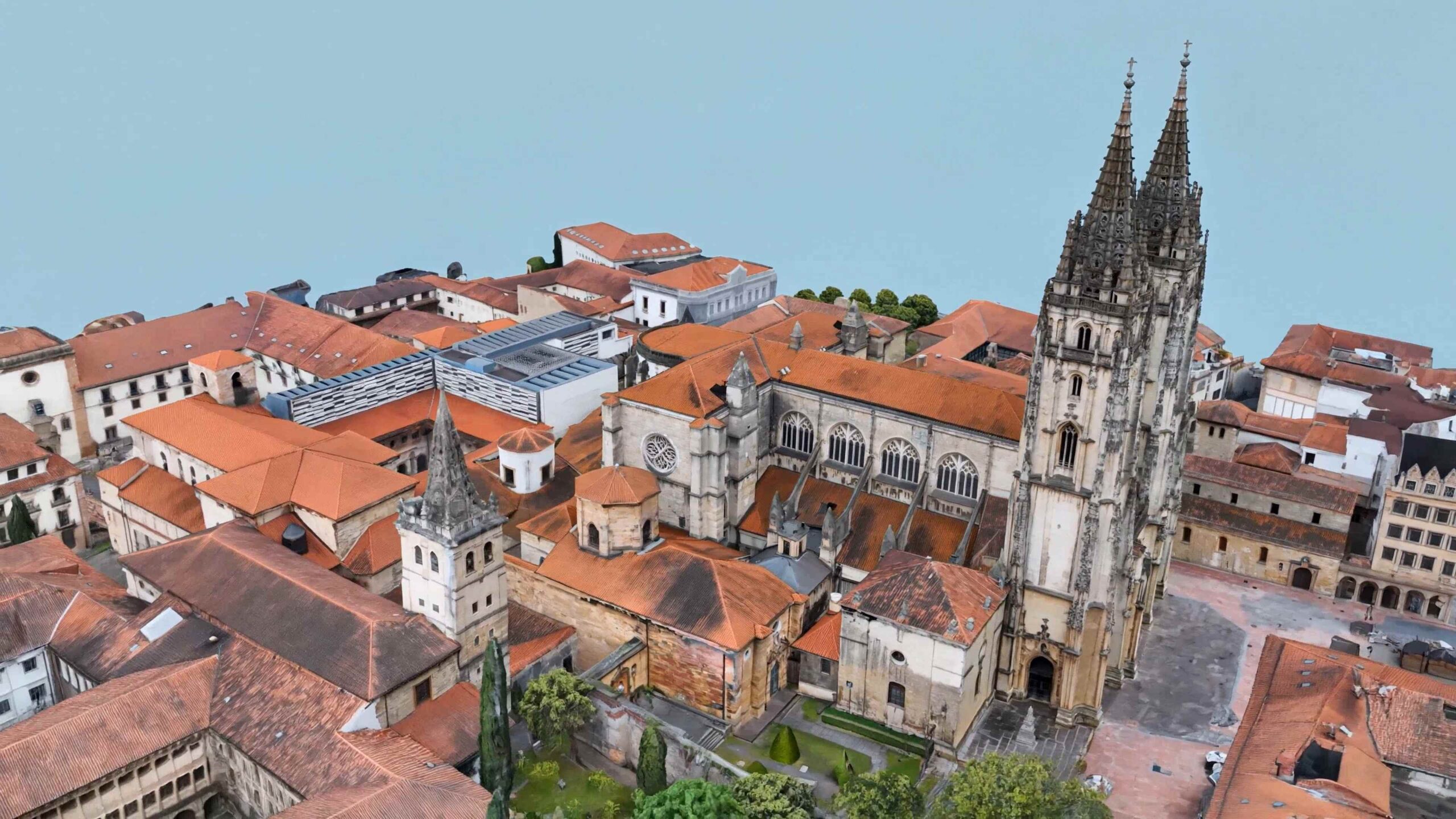
Oviedo Cathedral: digital twin and augmented reality experience
A high-precision digital twin of the Cathedral of San Salvador in Oviedo, scanned inside and out with LiDAR and drone flights, under the Tourism Sustainability Plan “Oviedo, Origen del Camino”. A navigable, georeferenced 3D model, and an augmented reality experience of the Gothic Tower.
Frequently asked questions
It is a precise, navigable virtual representation of a building, an archaeological site or a facility. It makes it possible to document the current state, to reconstruct historical phases and to work on the model without intervening on the original.
LiDAR scanning and drone photogrammetry, modelling of the digital twin, the virtual reality experience or the viewer, and, when the brief asks for it, the 3D-printed scale model. We hand it over ready for use.
The digital twin is the reference 3D model. The scale model is its physical version, useful in an exhibition and also accessible by touch. Virtual reality lets people walk through the place at life size with a headset, as if they were inside it.
We have created the digital twins of the Castillo de los Vélez, the Villa Romana de Los Cantos and the Alquería of Villa Vieja, with a printed scale model and a virtual reality experience, and the digital twin of Oviedo Cathedral, with LiDAR scanning and drone flights.
Do you have a digital twin project you would like to discuss?
Tell us about the monument, archaeological site or facility you want to document. We will propose a tailored solution.