


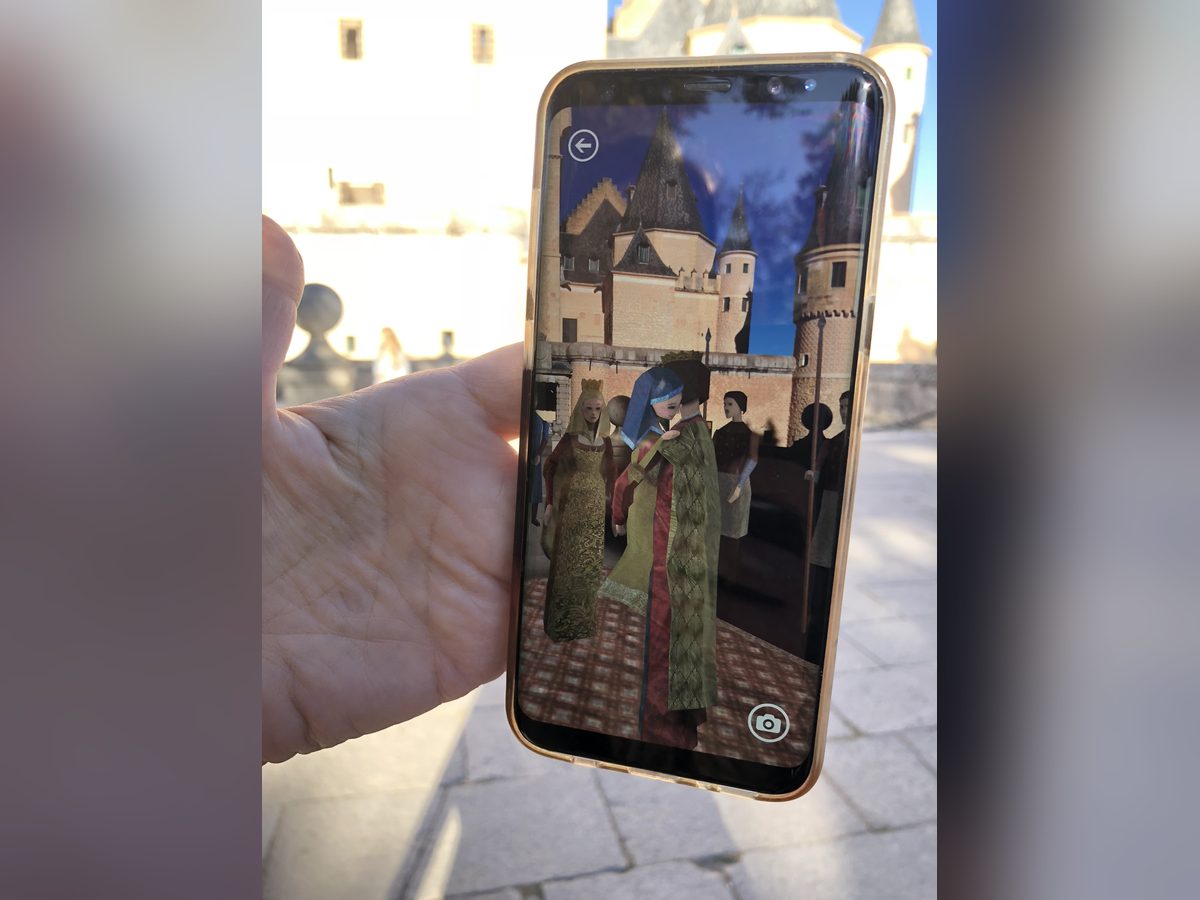
Augmented reality for tourism does not ask visitors to imagine what a monument was like. Instead, it shows it on the real site, at scale, from a phone or tablet. At Natoural DS we bring more than 15 years of experience in new technologies. We design augmented reality apps and websites for destinations, museums and city councils. We also take care of the script, the 3D modelling and the development for iOS, Android or the browser.
What augmented reality brings to tourism
Augmented reality adds 3D models, text, audio or video to what the camera sees. The visitor therefore remains in the street or on the site. They are not isolated with a headset. In particular, it is used to see a vanished building, a wall or a factory on its present site. It also makes it possible to explain a route without handing out paper leaflets. Turespaña promotes tourism in Spain. Many destinations are therefore looking for formats that travellers will use during the visit. Augmented reality for tourism fits that context. Below we review real commissions that are already in use.
See what no longer exists, on the site itself
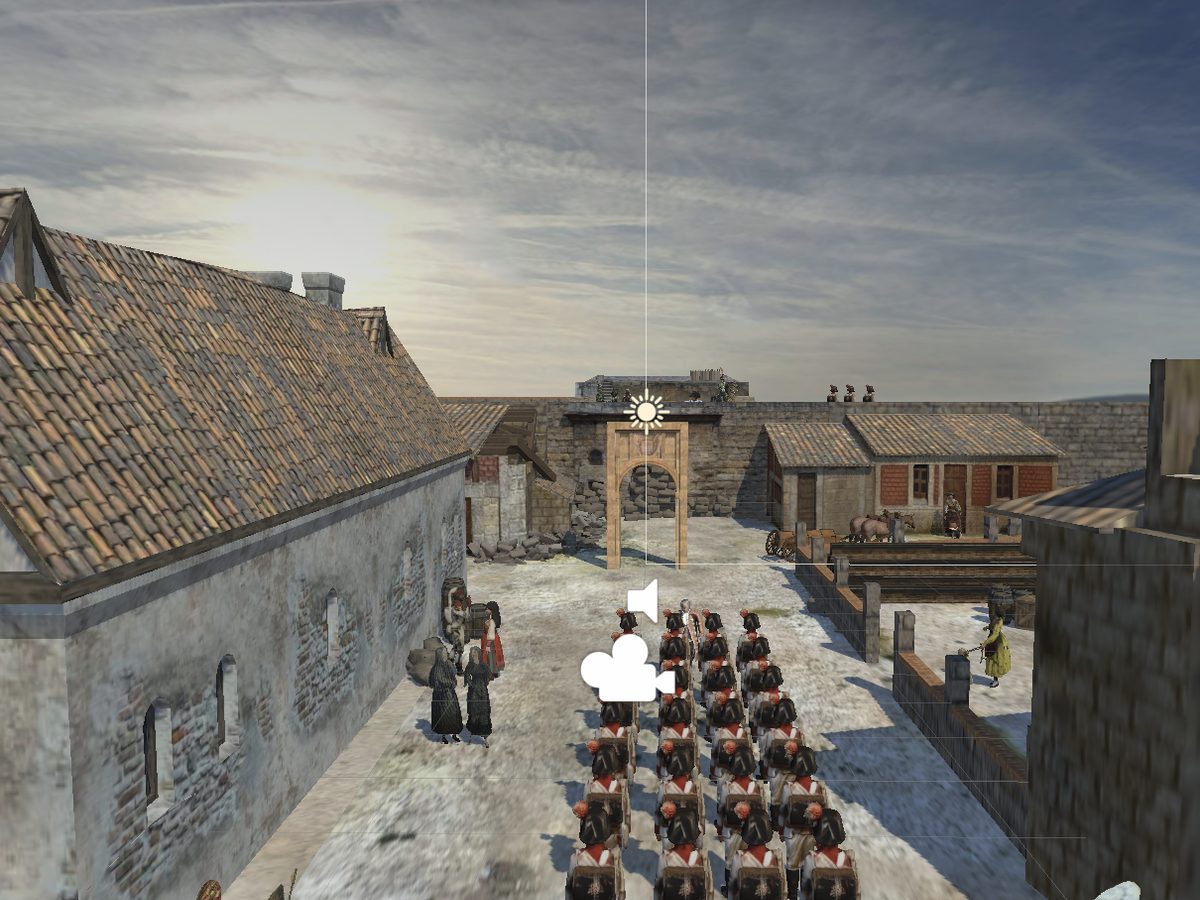
For example, Ciudad Rodrigo City Council, in Salamanca, commissioned an application for iOS and Android from us. Ciudad Rodrigo AR Experience recreates the Peninsular War (1808–1814) on the real sites. With ARKit and ARCore, the visitor sees walls, sieges and battles at life size. The reconstruction is also based on historical documentation. Tourists therefore do not only contemplate the present-day ruins. They interact with the municipality’s past on the very site of the events.
We also developed Telefónica 5G Segovia AR Experience in Segovia. It was a Telefónica pilot project, carried out between 2019 and 2020. It had the support of Segovia City Council and Turismo Segovia. The tour evokes the Segovia of the Catholic Monarchs. A virtual minstrel guides the visitor. Among other points, the experience includes the Alcázar, the Church of San Miguel and the Aqueduct. We also reconstructed in 3D monuments and buildings that no longer exist. The project page includes 3D modelling, 360° video, streaming and 5G. The aim was to test that network in a tourist setting with many users at once. You can even take a digital “selfie” with characters from the period.
A destination app with 3D models and routes
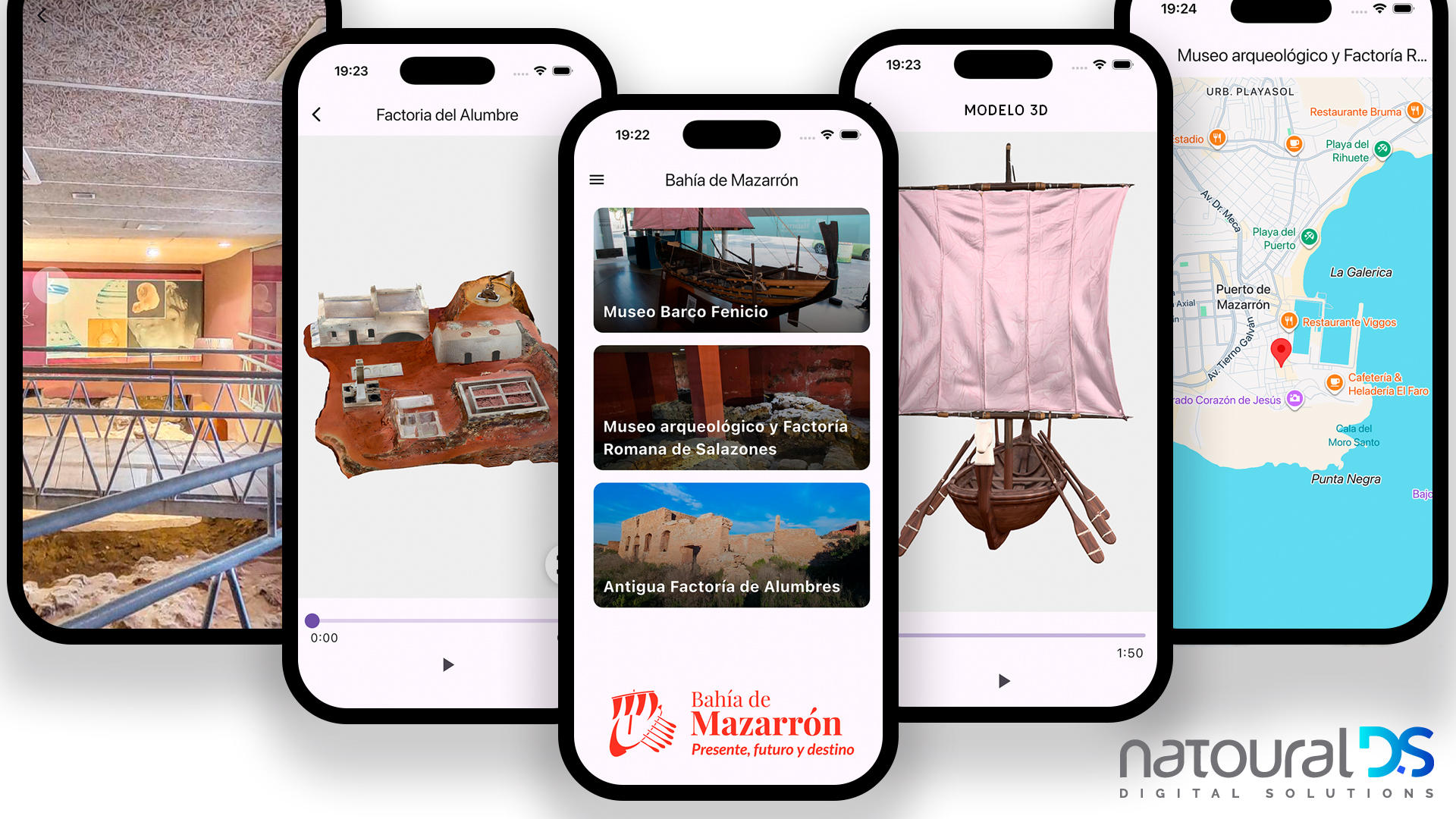
Augmented reality for tourism can also live inside a destination guide. For example, Mazarrón Virtual turns the Bay of Mazarrón into an open-air museum on the phone. The app brings together three protagonists of local history. They are the Phoenician Ship Museum, the Roman salting factory and the former Alumbres works. Each space combines text, images, 3D models and 360° views. From the app you can check how to get there and look at a 3D model of the Phoenician ship. There is also a 360° view of the interior of the museum. At the Alumbres works, augmented reality shows how the complex looked when it was in operation. The application is also on Google Play and the App Store.
In the same way, the Tierras de la Vera Cruz app groups six municipalities. They are Bullas, Calasparra, Caravaca, Cehegín, Moratalla and Mula. It integrates 3D models and augmented reality at the monuments. It also offers geolocated maps, an events calendar and local gastronomy. In this way, travellers can organise their route from a single environment. This format serves a tourism department that wants to unify several resources. Augmented reality for tourism is then integrated into the destination guide. It does not remain as an isolated piece, disconnected from the rest of the offer.
An augmented reality website, with nothing to install
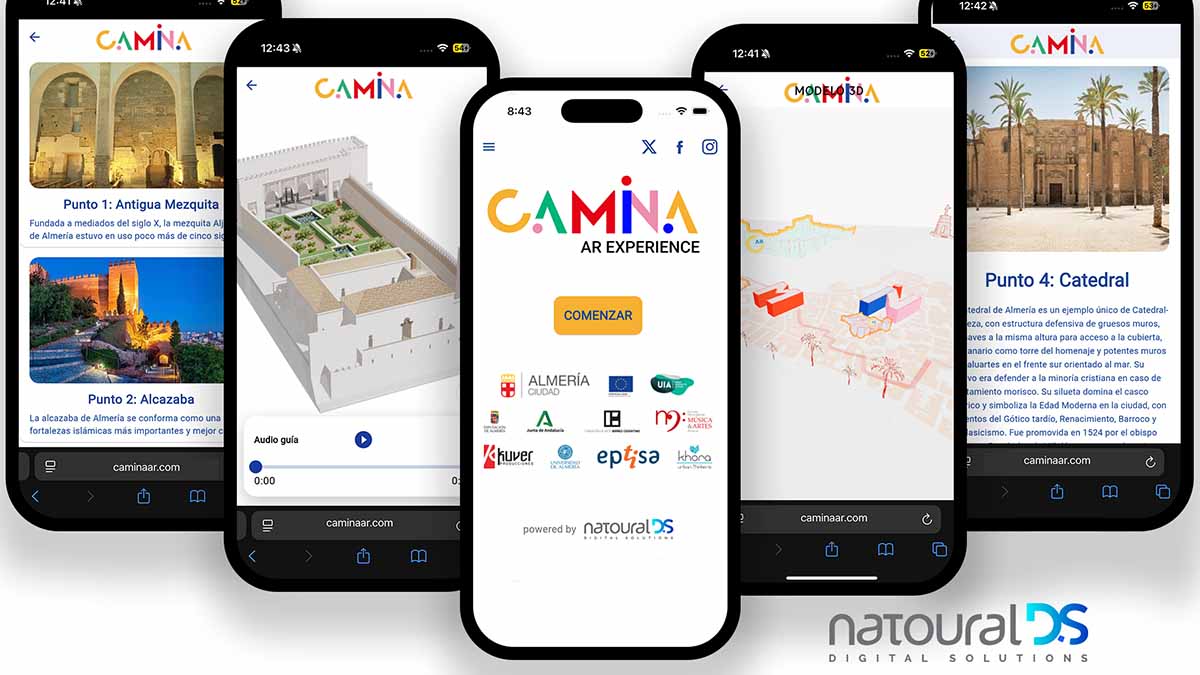
You do not always need to download an application, however. For Almería City Council we created Almería Camina AR. It is an augmented reality website with 3D reconstructions of monuments. It works in the phone’s browser, with nothing to install. It uses the ARCore and ARKit engines. Access is therefore immediate for any visitor. The project can be consulted at caminaar.com. For a city council, this model simplifies dissemination. The visitor opens a link and is already inside the experience. Download friction, permissions and store updates are therefore avoided.
A QR code to open the experience in the street
In Oviedo we applied another format, equally direct. The Gothic Tower augmented reality experience forms part of the work at the Cathedral of San Salvador. The City Council promoted it as part of the “Oviedo, Origen del Camino” plan. It opens by scanning a QR code from a phone, with nothing to download. It combines 360° reconstructions, 3D animation, narration and surround sound. In this way, the content reaches the visitor in the monument’s own setting.
How to start a project in your destination
If you run a tourism or heritage department, the first step is to choose the format. You do not need an app for everything. You can start with a monument, a route or an augmented reality website. The usual process begins with documentation and a script. Then comes 3D modelling and reconstruction. Next, the application or website is developed. Finally, it is tested on site and published. Augmented reality for tourism can be combined with our other solutions. For example, with virtual reality or with a digital twin. On our Augmented Reality page we explain this process in more detail. Tell us about your project on the Contact page.

