


Museum digitalisation is not only a matter of putting a video on a website. It is used to conserve, explain and bring collections closer to a wider public. At Natoural DS we do this with technology that we have already applied in museums and interpretation centres. For example, we combine immersive rooms, virtual reality, 3D scanning and physical models. We also add augmented reality and digital twins when the commission calls for them.
What museum digitalisation brings
A digitised museum does not replace the in-person visit. It does, however, extend what the visitor can see and understand. It also helps the technical team to document a space with precision. The International Council of Museums (ICOM) defines the museum as an institution in the service of society. The technology must therefore serve that purpose, not the other way around. Below we review formats that we have already delivered in real projects.
Immersive rooms and projections on the site
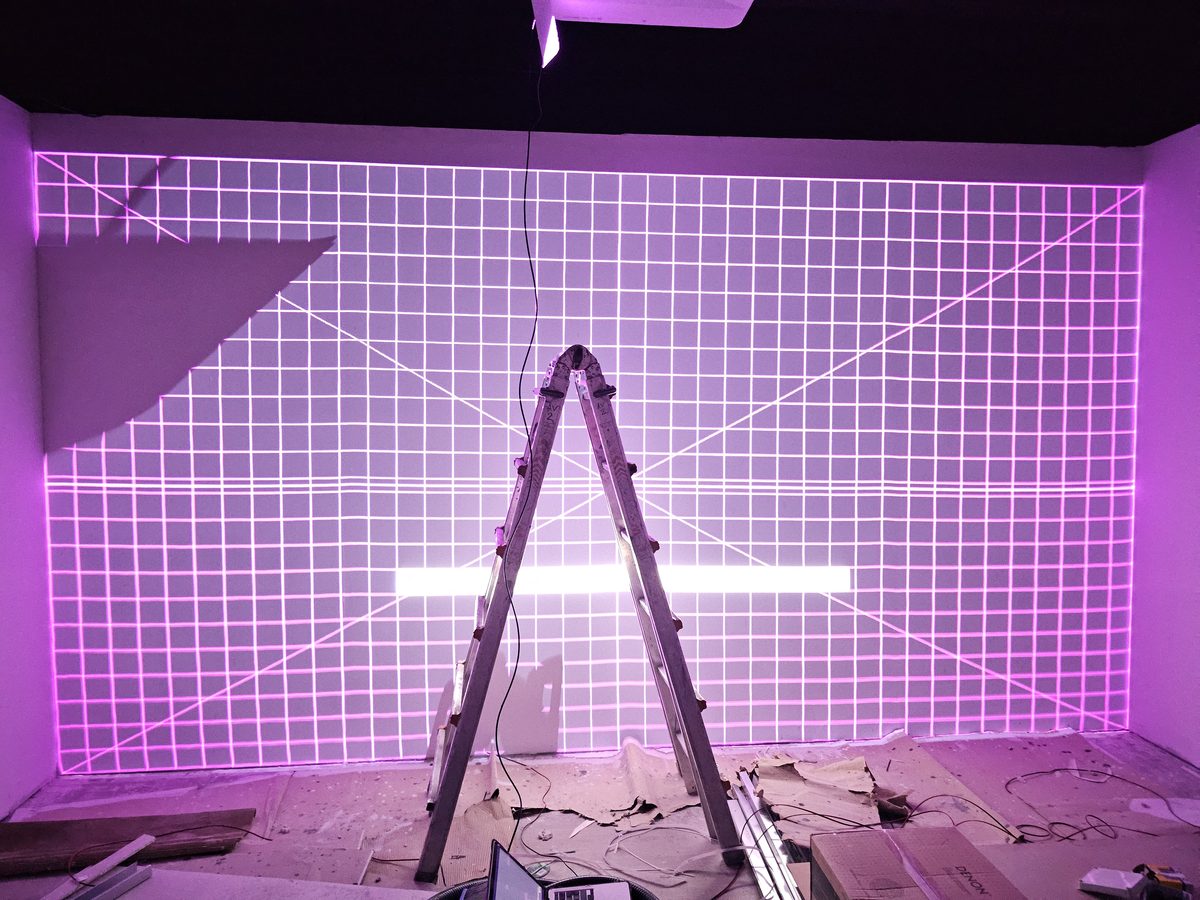
An immersive room surrounds the group with image, sound and lighting. The experience is therefore shared and does not require headsets. In particular, at the Museo de la Fiesta in Caravaca de la Cruz we designed a room of this kind. The commission came from the City Council of Caravaca de la Cruz. There we combined 360° projection, surround sound and dynamic lighting. We also integrated interactive multimedia content. The room makes it possible to walk through key moments of the festive tradition. It does so with large-format images, sound effects and digital resources. We were responsible for the concept and the museographic design. We then produced the content and installed the audiovisual systems. Finally, we handed over the installation ready for use. On our Immersive Rooms page we explain this process in more detail.
Virtual reality for touring a museum or a monument
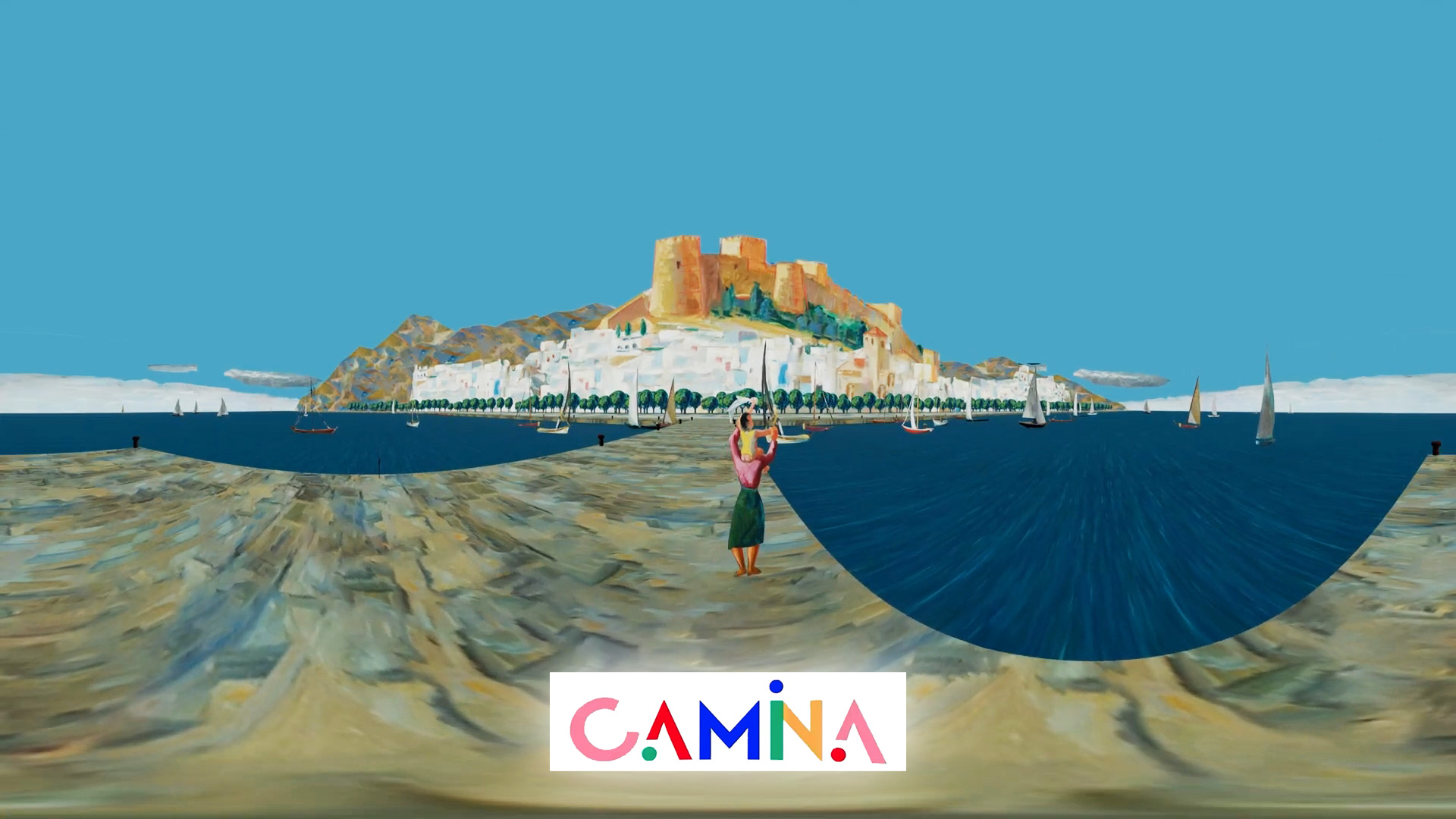
Virtual reality places the visitor inside a space at true scale. For example, Almería City Council commissioned an application for Meta Quest from us. The Almería Camina VR experience recreates the Doña Pakyta Museum of Art. The visitor walks through the galleries and approaches the works. In particular, the app focuses on the Indalian Movement and on the paintings of La Chanca. The pictures come to life with three-dimensional animations and historical narration. You can even enter the scene recreated in three dimensions. The project forms part of the European Urban Innovative Actions programme. It is also co-financed with ERDF funds.
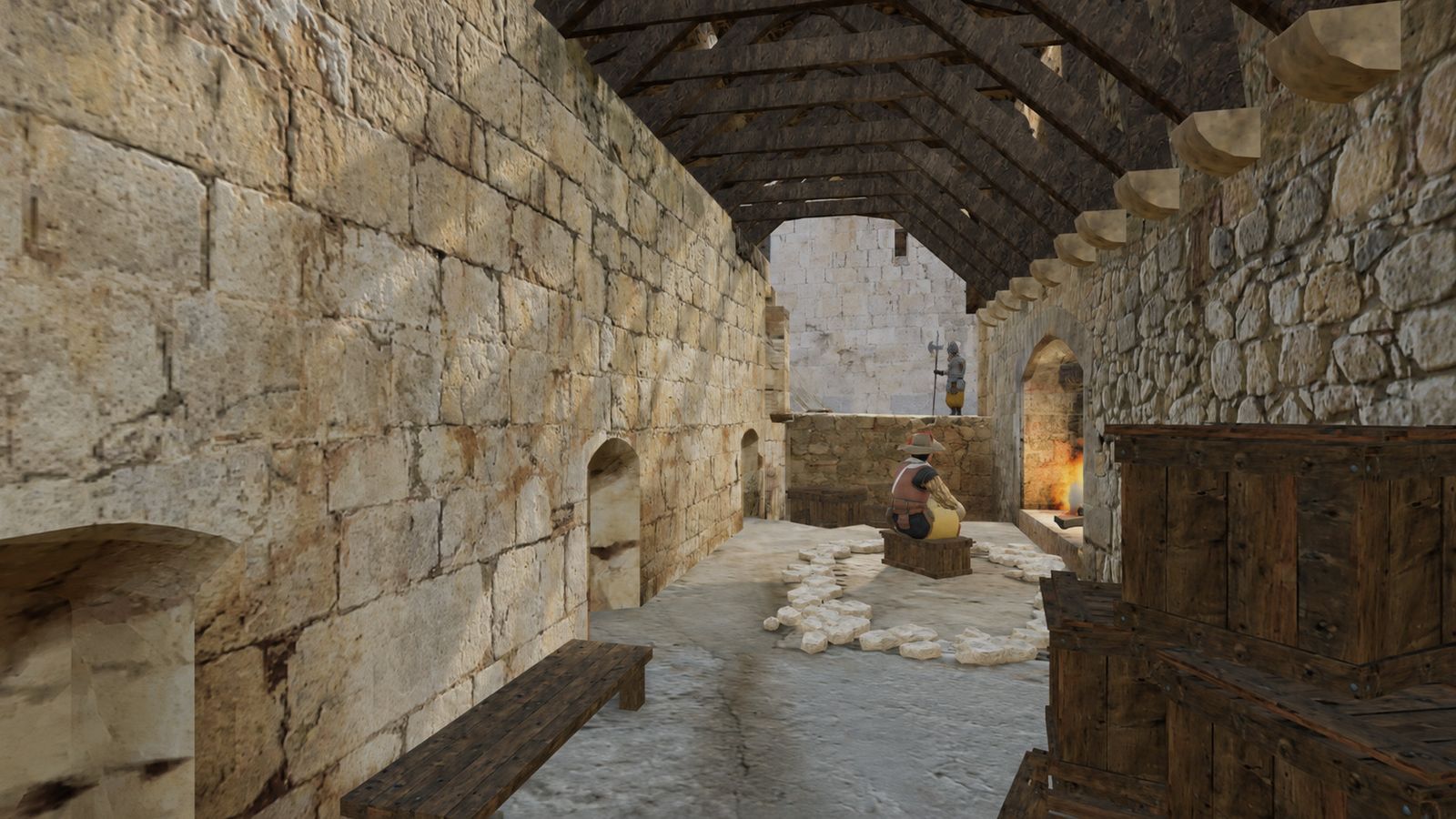
This format is also useful when a monument cannot be visited regularly. That is the case with the Castillo de los Vélez. There we created the “Castillo de Mula” experience for Meta Quest. The visitor walks through a fortress of 1520–1531 that is not usually open. The reconstruction includes the keep, the wall and the parade ground. Further details are on our Virtual Reality page.
Escaneado 3D, gemelos digitales y maquetas
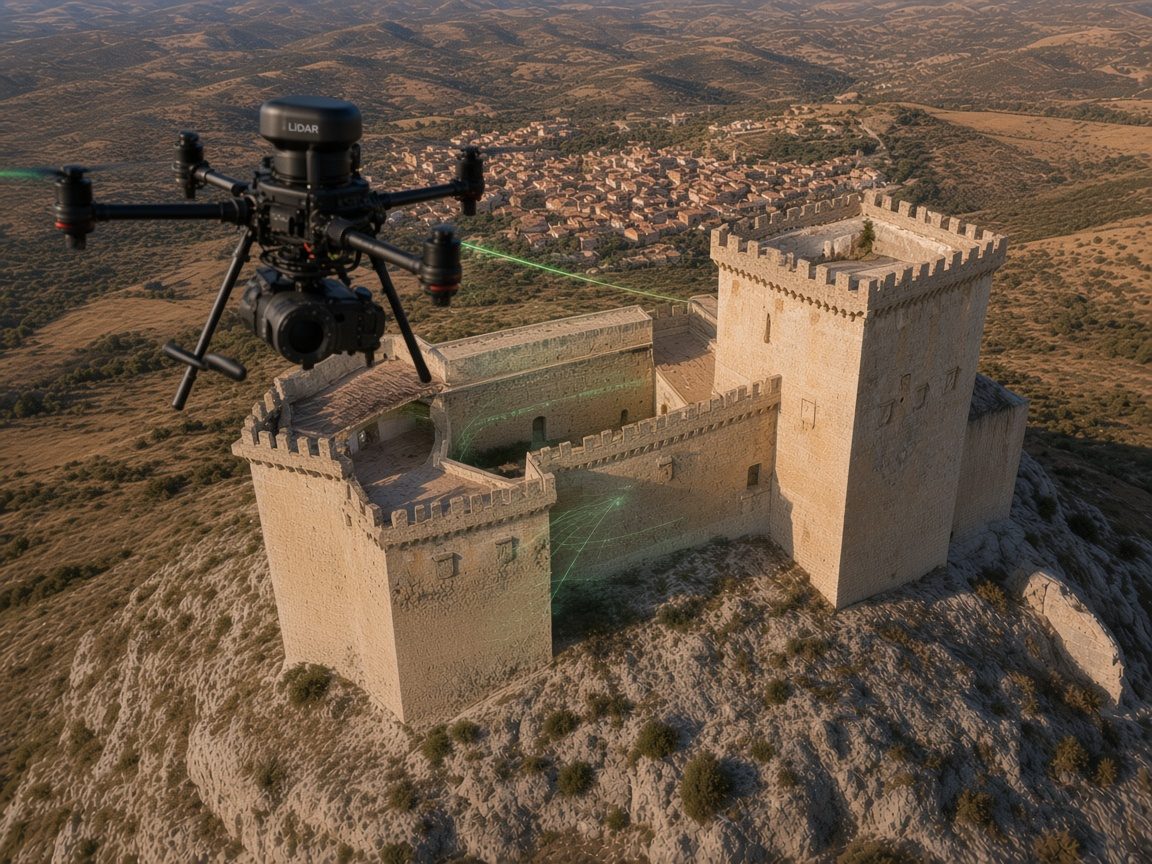
LiDAR scanning and drone photogrammetry document a building or an archaeological site. From that capture we model a digital twin. That 3D model is used for conservation, research and public outreach. For example, at the Cathedral of San Salvador in Oviedo we scanned the church inside and out. The work was done with LiDAR and drone flights. Oviedo City Council promoted it as part of the “Oviedo, Origen del Camino” plan. The result is a navigable, georeferenced model. It is also used for conservation and research. From the same work we produced five short films about the monument. They cover the exterior, the façade, the interior, the Cámara Santa and the origin of the Camino. We also published a 360° virtual tour that can be visited from the browser, with no app to install.
Physical models and touchscreens in the exhibition
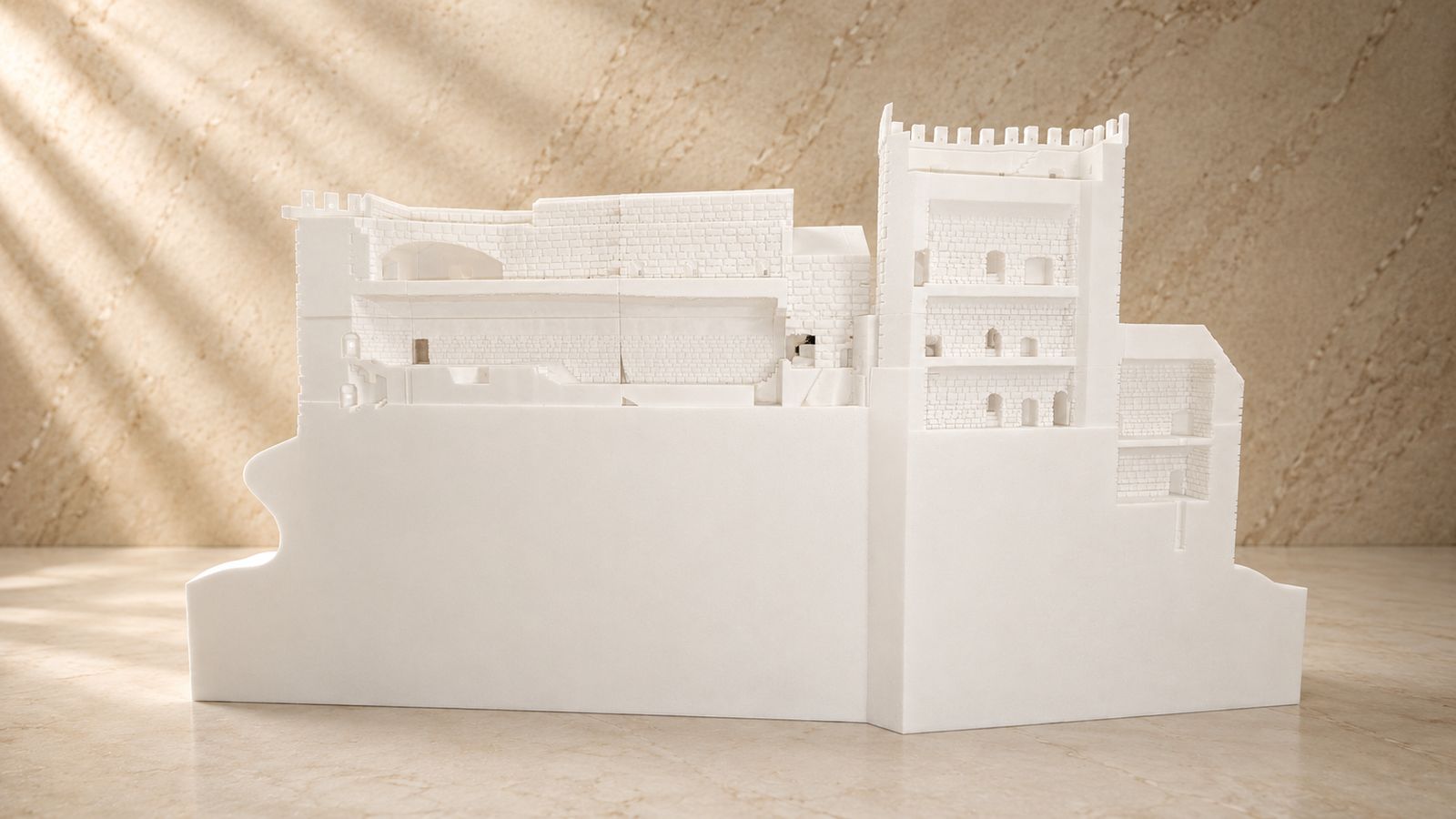
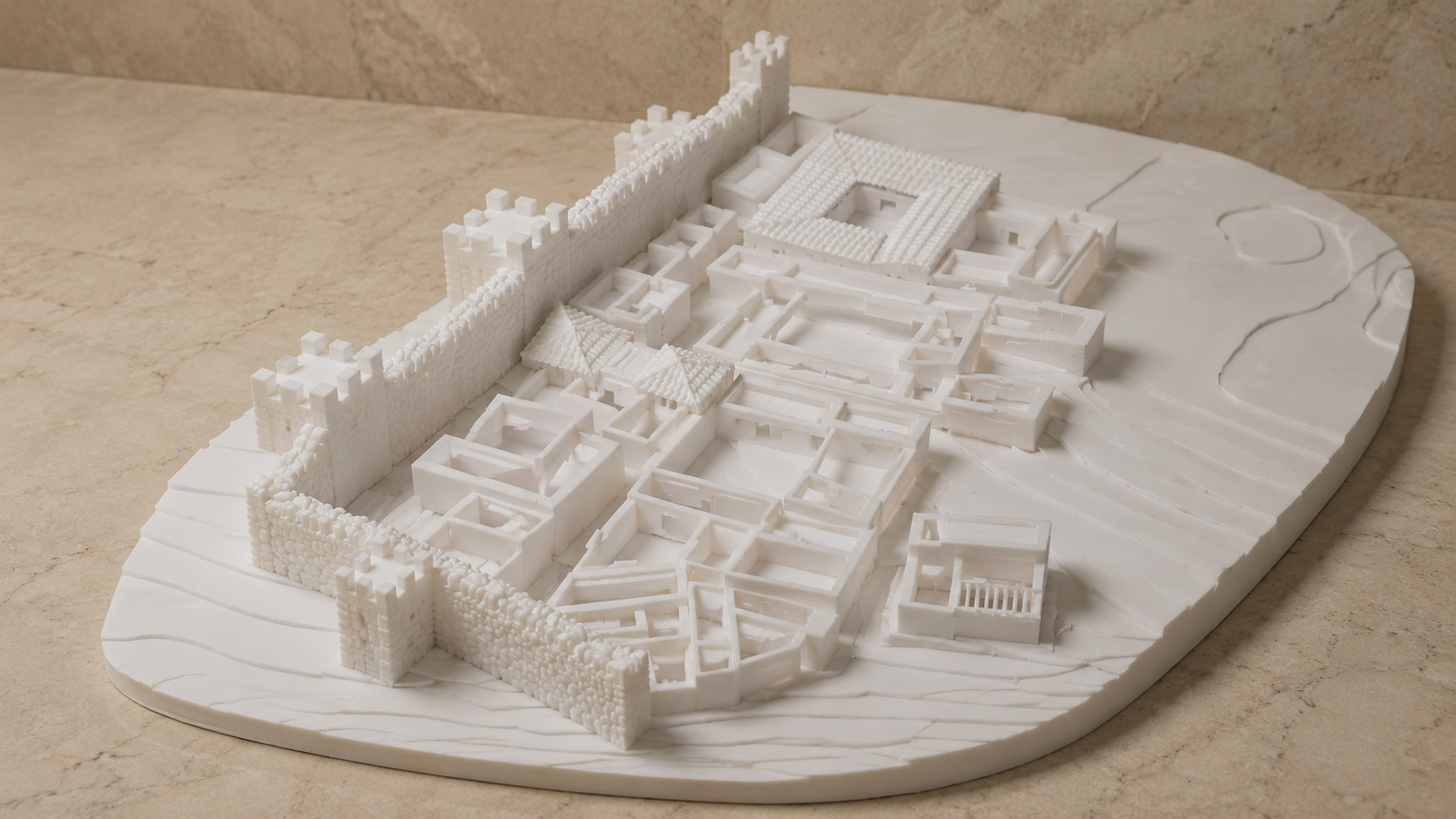
The 3D-printed model is the physical version of that digital model. In particular, it is useful in an exhibition and can be explored by touch. At the Villa Romana de Los Cantos the model is on display at the Museo del Vino in Bullas. It also includes Braille labelling. The model reproduces the pars urbana and the torcularium, the historic pressing area. There is also a 3D web viewer for touring the villa from any device. Turismo Bullas uses Meta Quest headsets with the application on guided visits. We applied the same approach at the Alquería de Villa Vieja. There is a digital twin, a “Villa Vieja” experience for Meta Quest and a tactile model. We also adapted the interactive environment for touchscreens in interpretation centres. It is intended for the Villa Vieja Interpretation Centre and for the Museo Arqueológico La Encomienda. At the Castillo de los Vélez there is also a 3D-printed model, with Braille, alongside the virtual visit. On the Digital Twin page we explain the difference between a model, a physical maquette and a virtual visit.
Augmented reality during the visit
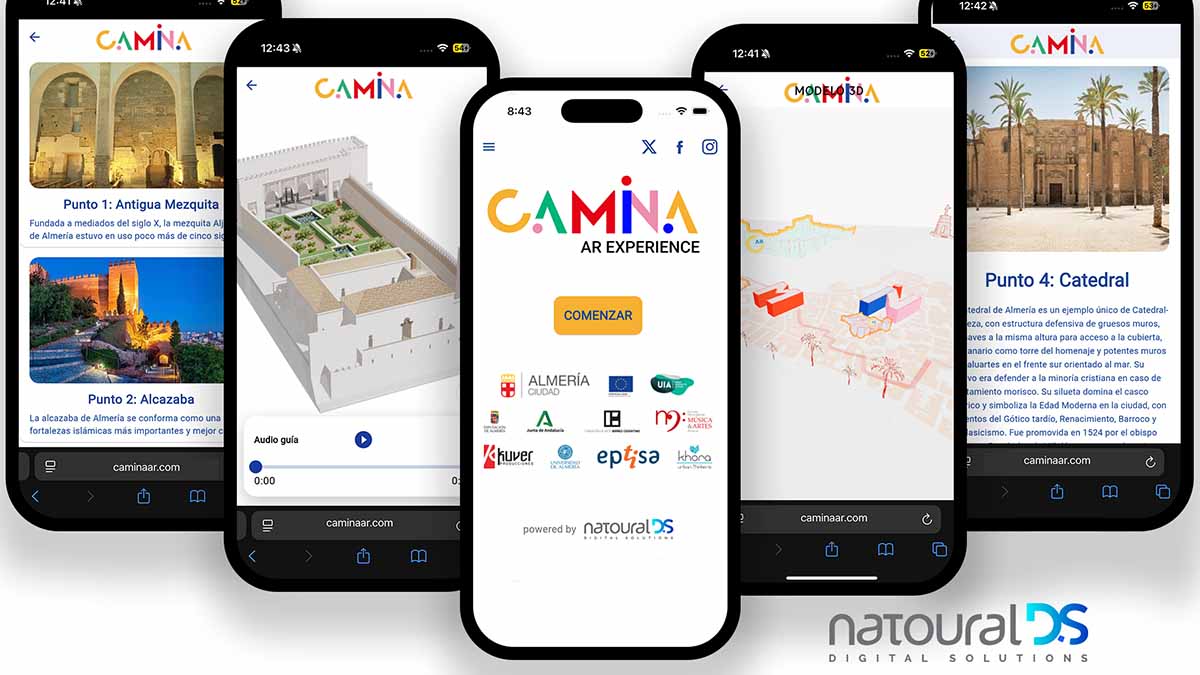
Augmented reality adds digital layers to the real place. The visitor therefore remains in the gallery or in the street. In Oviedo we created an experience of the Gothic Tower. It opens with a QR code from a phone, with nothing to download. It combines 360° reconstructions, 3D animation and narration. For Almería City Council we also developed Almería Camina AR. It is an augmented reality website with 3D reconstructions. It works in the browser, with no application to install. On the Augmented Reality page you will find more cases of this kind.
How to start a project in your museum
If you run a museum or a culture department, the first step is to choose the right format. You do not need to use everything at once. You can start with a room, a virtual tour or a physical model. The Spanish Ministry of Culture brings together information and resources on state museums. We help you specify the commission on the basis of your space and your story. Tell us about your project on the Contact page.

