


At Natoural Digital Solutions we have developed Rio Tinto VR, a virtual reality application for Huelva City Council. The commission forms part of Huelva’s Plan Turístico de Grandes Ciudades (PTGC de Huelva) and has a clear objective: to bring the visitor a historical reconstruction of the Rio Tinto Compañía pier, the loading pier that linked the city with the ore trade.
The Rio Tinto Company shaped the development of Huelva and left a mark on its landscape, its economy and its identity. Rio Tinto VR offers a new way of discovering that heritage: with virtual reality headsets and in 360° video. Users turn their heads and walk through the scene; they do not need to press buttons to move forward. The story is set in 1888 and takes the visitor through four key points in the city.
A virtual reality app on Meta Quest
Rio Tinto VR was published on 24 June 2026 on the Meta Store, free of charge, under the name natouralDS. It is available for Meta Quest 2, Meta Quest 3, Meta Quest 3S and Meta Quest Pro.
It is a 360° immersive experience, designed for educational use and accessible to all ages. It recreates historic scenes of the city and can be enjoyed without an internet connection, both on a visit to the destination and from anywhere else, by downloading it to the headset.
Four places that tell the story of a city
The Rio Tinto VR tour is organised in four scenes, the same ones described on the app’s public listing.
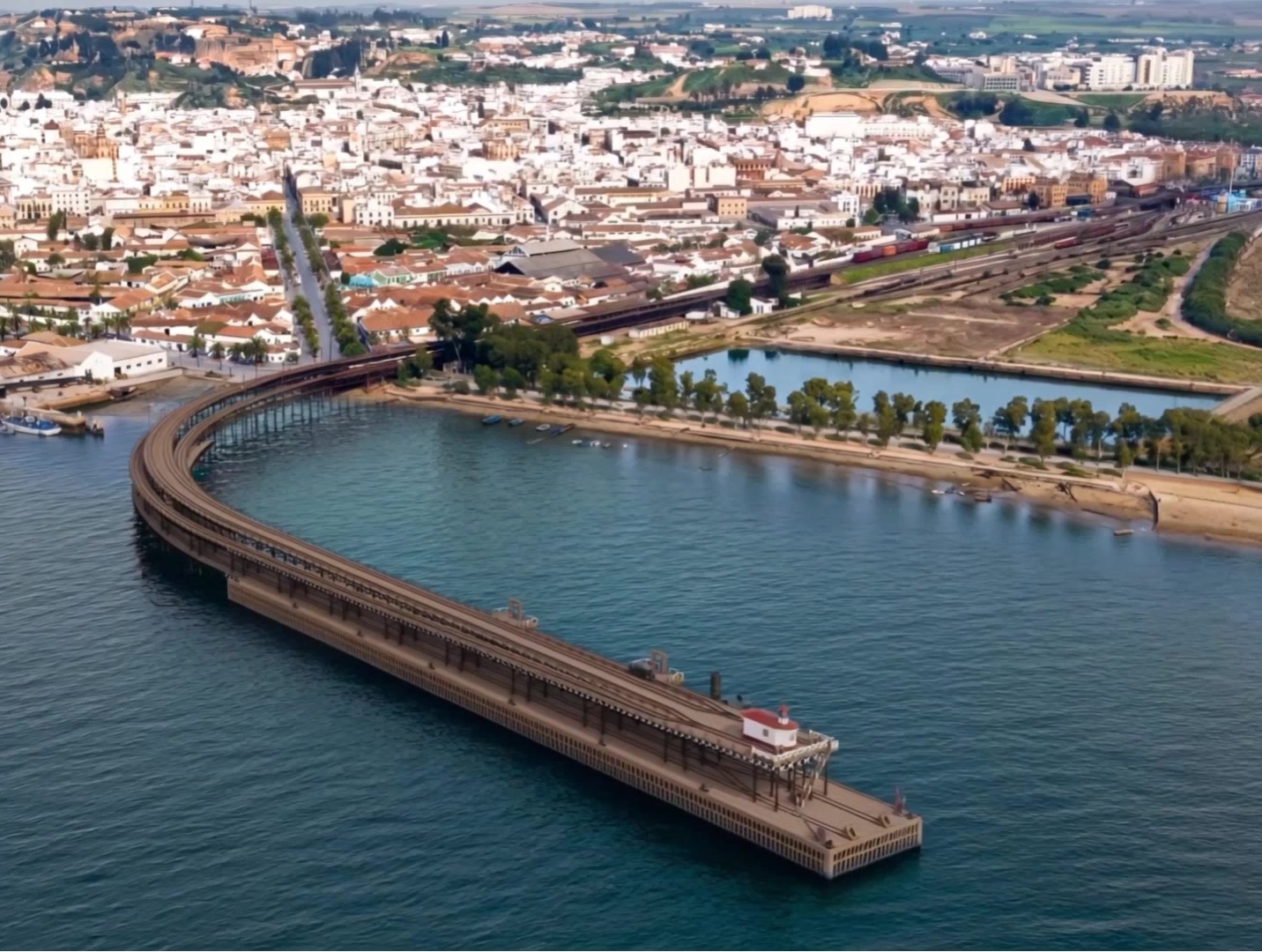
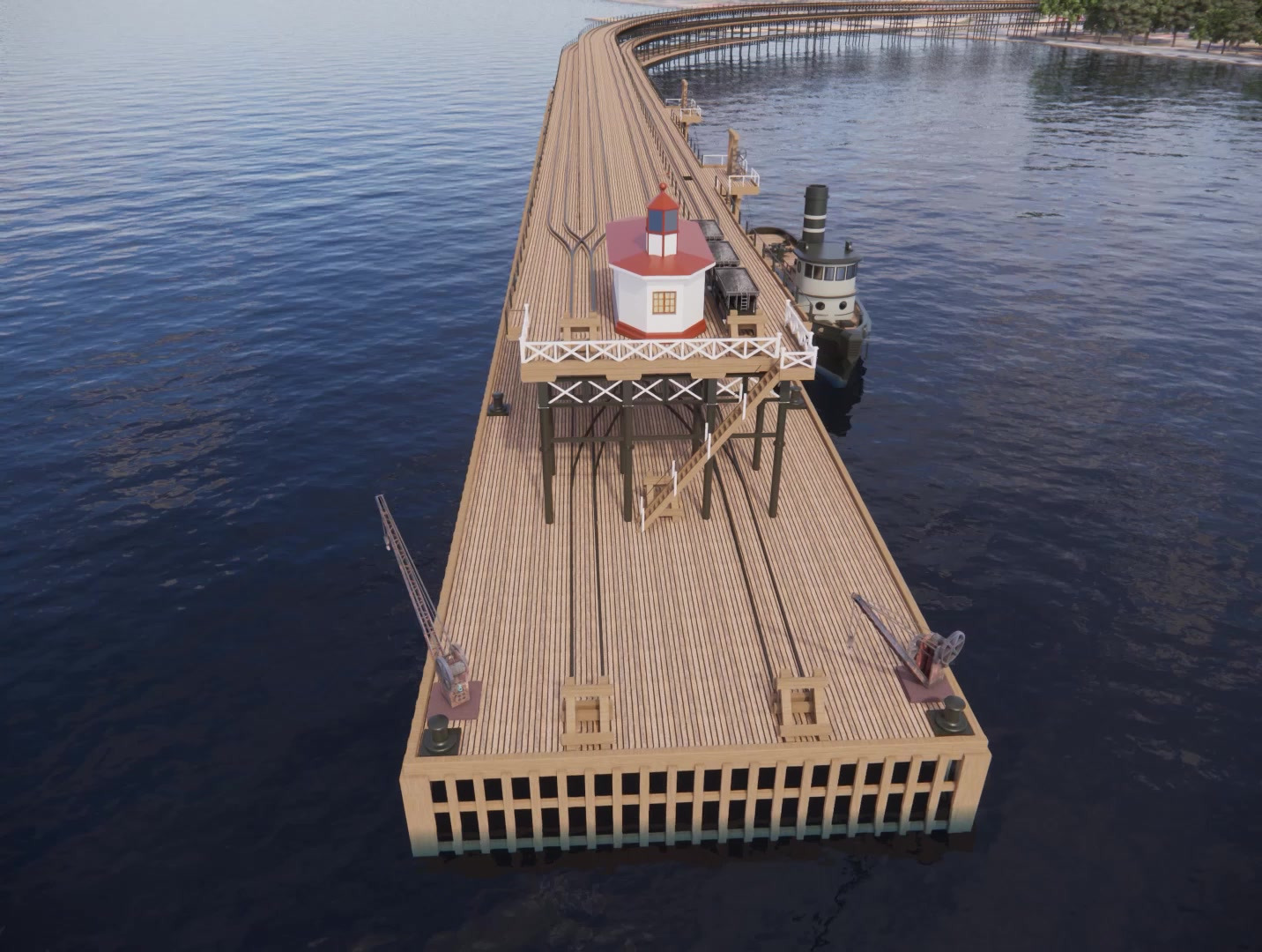
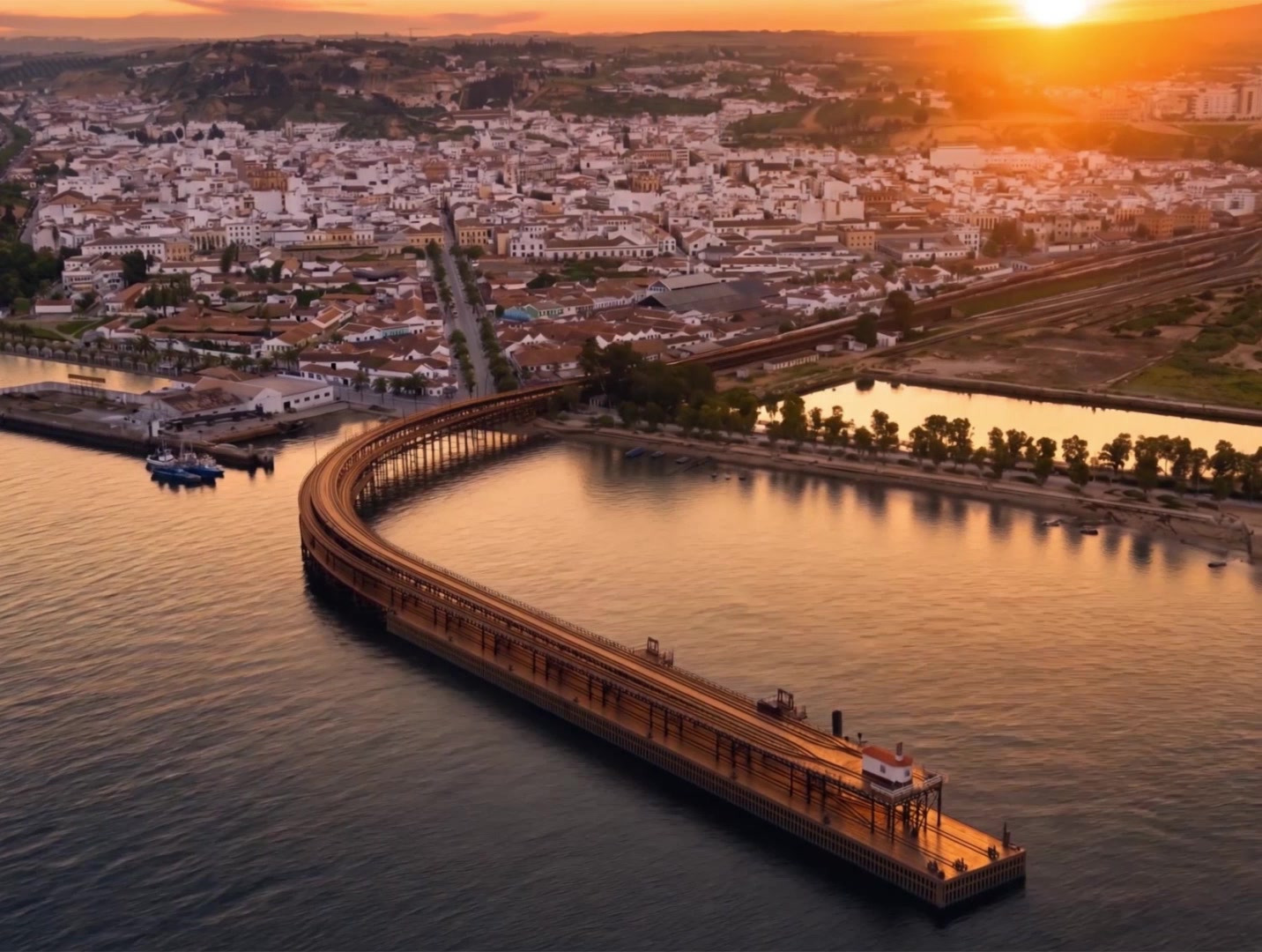
At the pier, the visitor stands on the historic loading pier, a symbol of Huelva’s connection with international trade and a witness to the mining boom. The reconstruction shows the end of the loading pier, the tracks, the cabin and the activity of the port on the River Odiel. The pier was built by the Rio Tinto Company between 1874 and 1876.
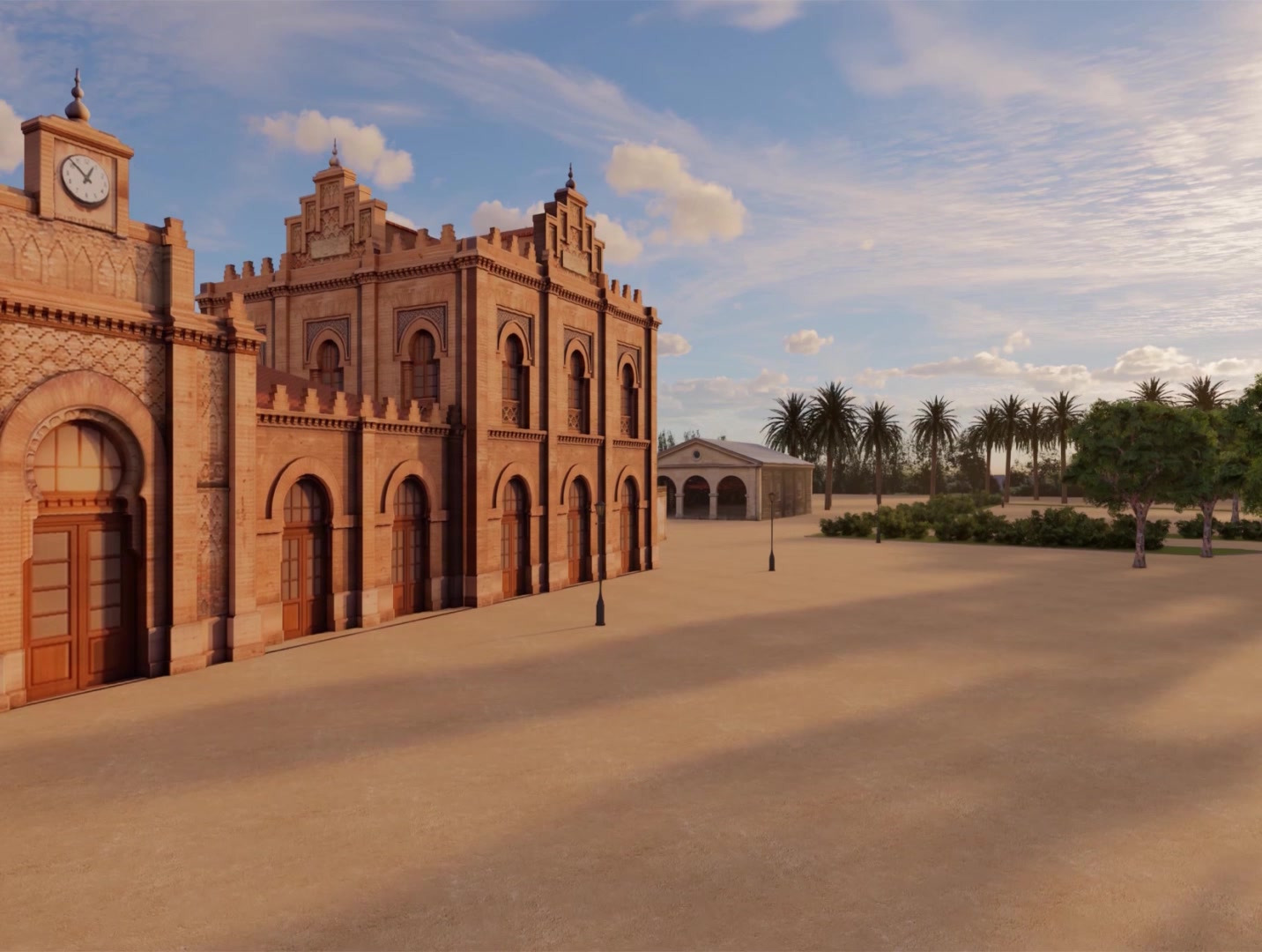
Casa Colón opens another side of that period: the building that reflected the architectural splendour linked to the Company’s activity. In the reconstruction, the visitor approaches its façade and walks through the gardens, away from the noise of the loading pier.
The Mercado del Carmen takes the visitor into the everyday life of the city: urban growth, the stalls and the bustle of the streets in those years.
Huelva-Término railway station closes the arc of the mining railway, the infrastructure that linked Huelva with the mines and with the rest of Andalusia, and by which the ore reached the port.
Together, these four places show how the pier, the railway and the Company transformed a whole city.
Two experiences, in Spanish and in English
For on-site visits, Huelva City Council has a system of Meta Quest 3 headsets. An operator chooses from a phone which content is played, and all the headsets show the same experience and the same language at the same time. The visitor only has to look around.
The system offers two experiences, each in Spanish and in English.
The first, The pier that breathes, is an immersive 3D and 360° reconstruction. The story takes place in Huelva, in 1888, and goes along the pier, Casa Colón, the Mercado del Carmen and the station. At the end, the view of the city of that time transforms into the Huelva of today: those who put on the headset do not only visit that year, they also see how that landscape has reached the present.
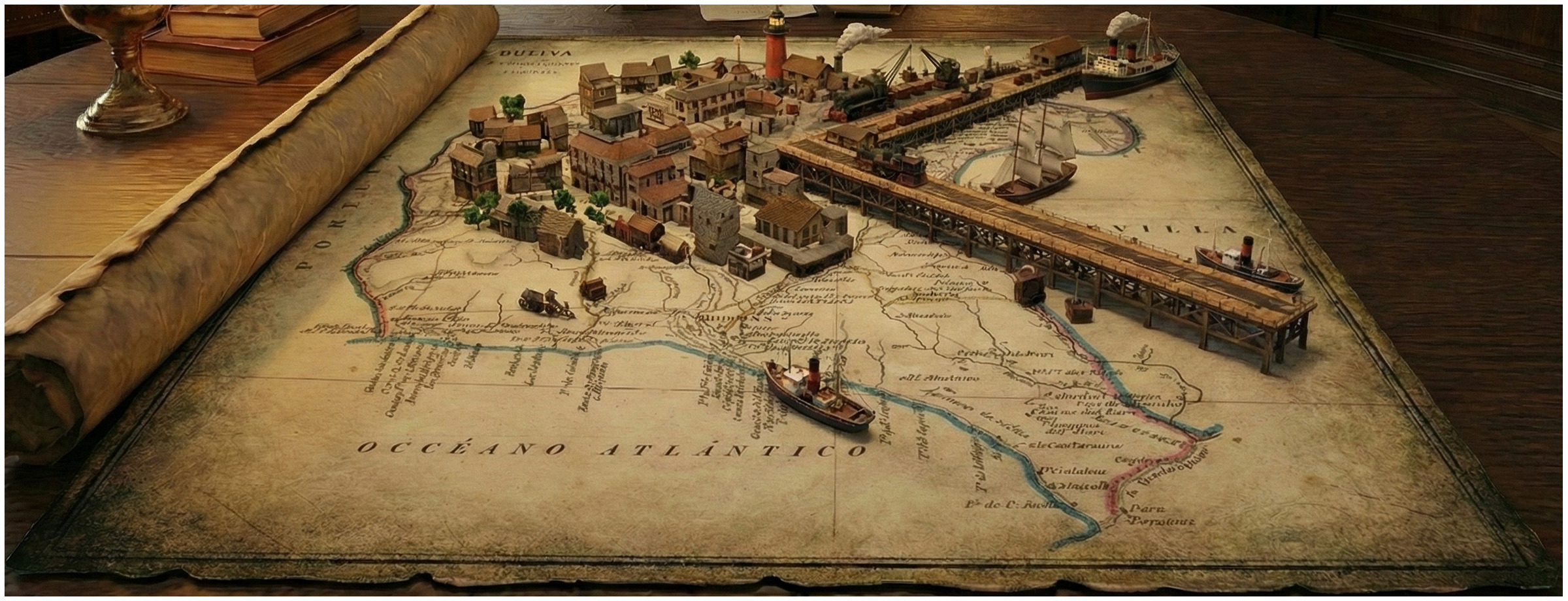
The second, The geometry of progress, is a 360° film with infographics. It explains the construction and operation of the pier, the trade routes that left Huelva and how the urban fabric changed between the late 19th century and the turn of the century. It is a more analytical story, designed to understand the pier as a work of engineering and as a driver of the city.
A new way of discovering the heritage of Huelva
The combination of 3D reconstruction, 360° video and infographics builds a complete digital experience around a single monument — the Compañía pier — and the city that grew with it. Each scene offers a different way of approaching that history: living it in the first person, or understanding it with plans, maps and data.
The work also draws on the historic photographic collection of the Huelva Municipal Archive, whose collaboration has made it possible to recreate corners and moments of the city’s memory.
We thank Huelva City Council for its trust and its collaboration in making this project possible.
See the Rio Tinto VR project page.
Do you have a monument or a destination to digitalise?
At Natoural DS we help public authorities and cultural organisations to digitalise their heritage with virtual reality, augmented reality, digital twins and immersive rooms.
If you want an immersive experience, a tourism app, a 3D model or a 360° narrative for a monument, a museum or a destination, tell us about your project. We will be glad to hear from you.

